

Running a business often means paying expenses before revenue arrives. Payroll, inventory, equipment repairs, rent and expansion costs can place pressure on cash flow even when the business itself is performing well. For new entrepreneurs or owners rebuilding after financial challenges, accessing suitable financing may feel even more complicated.
A business loan can provide the capital needed to manage short-term expenses, purchase assets or invest in growth. However, borrowing without understanding the interest rate, fees, repayment schedule and personal liability can create additional financial stress.
Knowing how business loans work in Canada can help you evaluate your options before committing to a lender. Whether you operate a small retail store, construction company, professional practice or self-employed venture, the right loan should support a clear business purpose and fit comfortably within your repayment capacity. Credit720 helps Canadian business owners understand financing choices, credit considerations and practical steps toward stronger financial stability.
What Is a Business Loan?
A business loan is money borrowed specifically for business-related expenses. The business receives a lump sum or access to a credit limit and repays the borrowed amount, usually with interest and applicable fees.
Business financing may be used to:
- Purchase equipment or commercial vehicles
- Cover inventory, payroll or supplier expenses
- Manage seasonal cash-flow shortages
- Renovate or improve business premises
- Consolidate eligible business debts
- Launch a new product or service
- Expand into a new location or market
Unlike grants, loans must be repaid. The business remains responsible for repayment even if the investment does not produce the expected results.
How Does a Business Loan Work in Canada?
The process normally begins when a business owner applies through a bank, credit union, government-supported program or alternative lender.
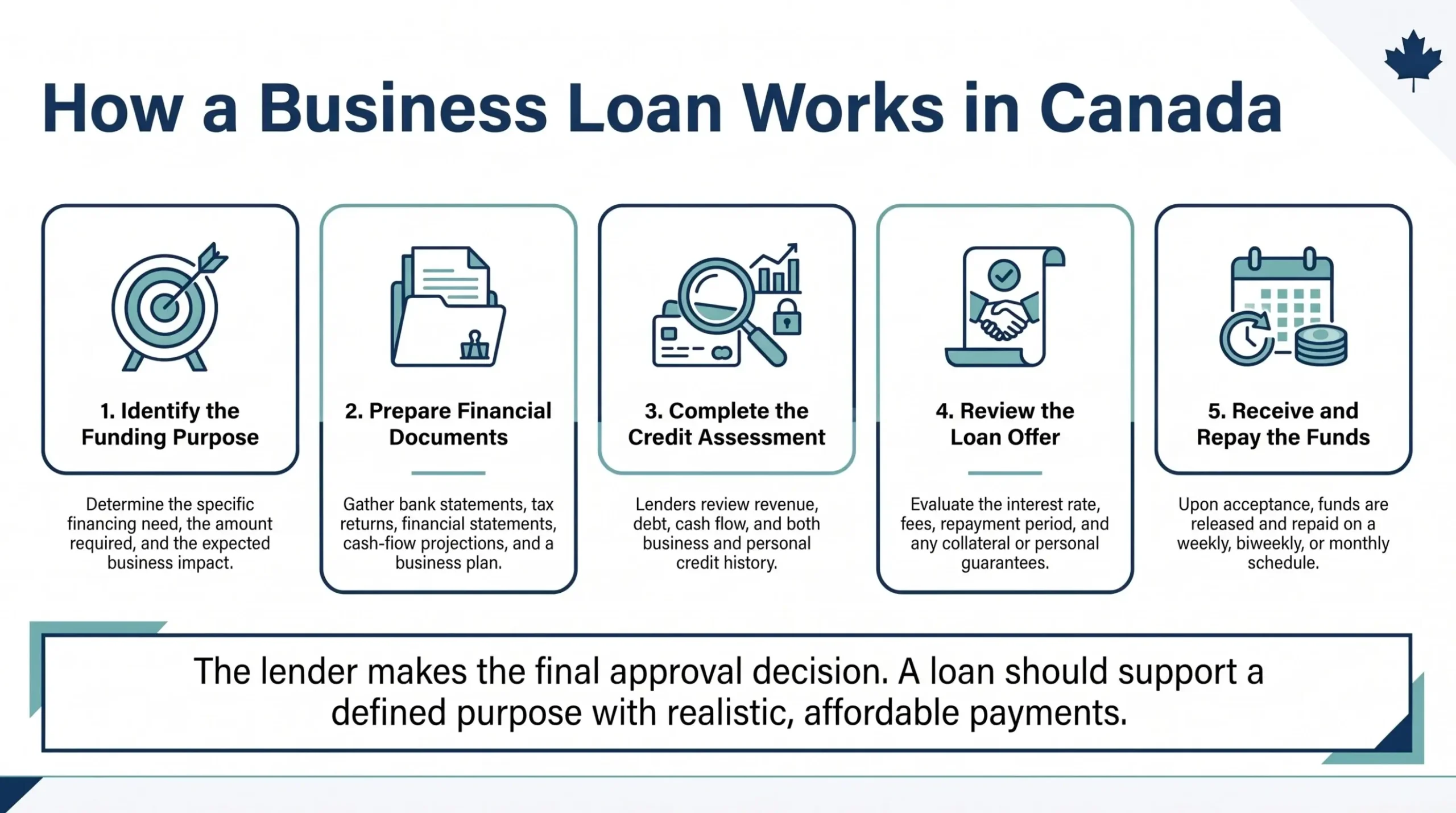
A typical business loan follows five steps:
- Identify the funding purpose: Determine how much money the business needs and exactly how it will be used.
- Prepare financial documents: Lenders may request bank statements, tax returns, financial statements, cash-flow projections and a business plan.
- Complete a credit assessment: The lender reviews the company’s financial position and may also examine the owner’s personal credit.
- Review the loan offer: If approved, the borrower receives terms covering the interest rate, fees, repayment period, security and personal guarantees.
- Receive and repay the funds: Payments are made according to the agreement, usually weekly, biweekly or monthly.
The lender not the government or an advisor makes the final approval decision.
Common Types of Business Loans
-
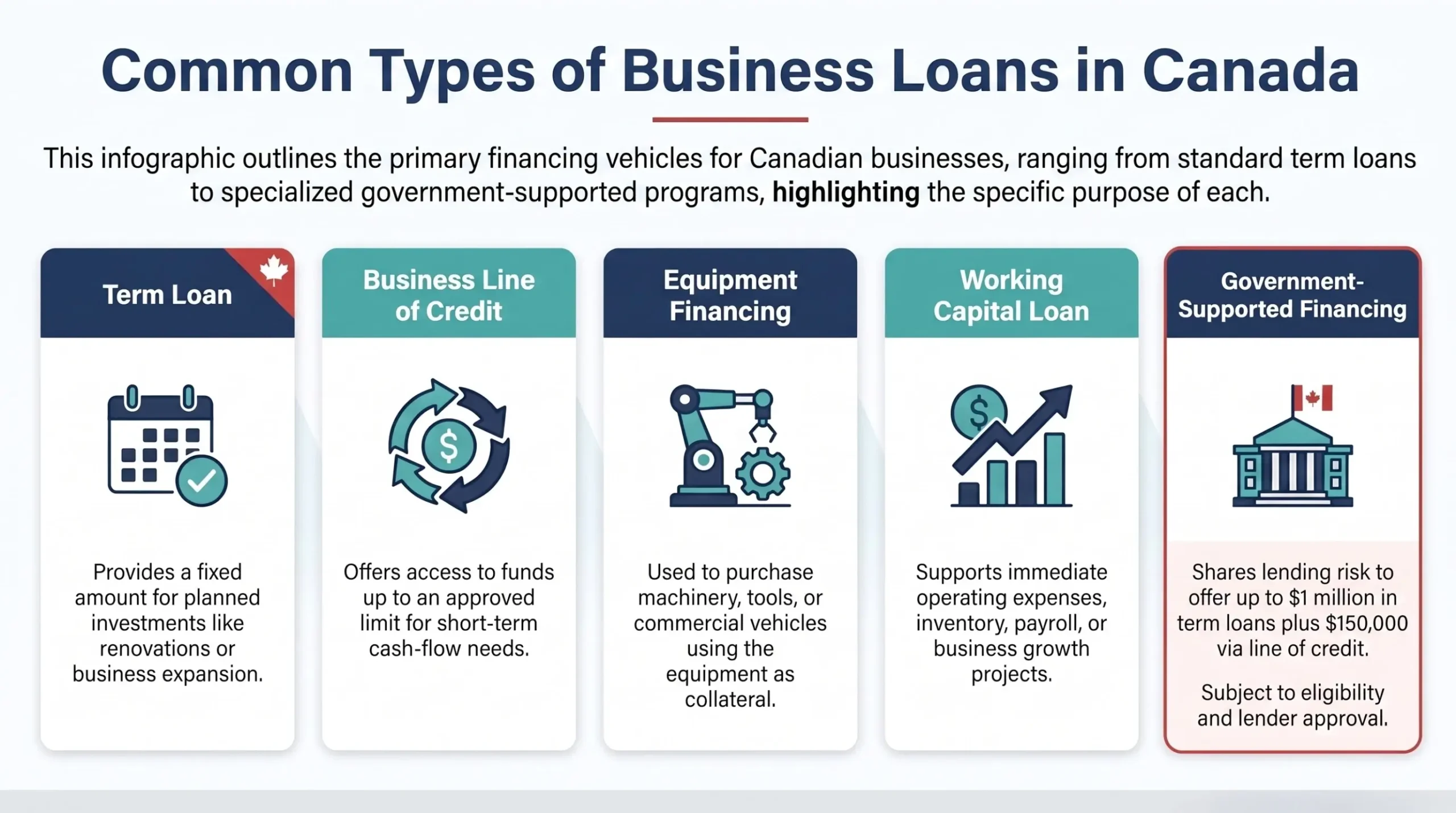
Term Loans
A term loan provides a fixed amount that is repaid over an agreed period. It may be suitable for equipment, renovations, expansion or another planned investment with a measurable cost.
-
Business Lines of Credit
A line of credit allows the business to borrow up to an approved limit and pay interest only on the amount used. It is generally more appropriate for short-term needs, such as paying suppliers while waiting for customer invoices. BDC advises businesses to avoid using a line of credit for long-term investments.
-
Equipment Financing
Equipment financing helps purchase machinery, tools, technology or vehicles. The financed asset may serve as collateral, which can reduce the lender’s risk.
-
Working Capital Loans
Working capital financing supports regular operating expenses or growth projects. Approval may depend heavily on historical and projected cash flow.
-
Government-Supported Financing
Through the Canada Small Business Financing Program, the federal government shares lending risk with participating financial institutions. Eligible borrowers may access up to $1 million in term loans and an additional $150,000 through a line of credit, subject to program rules and lender approval.
What Do Lenders Consider Before Approving a Loan?
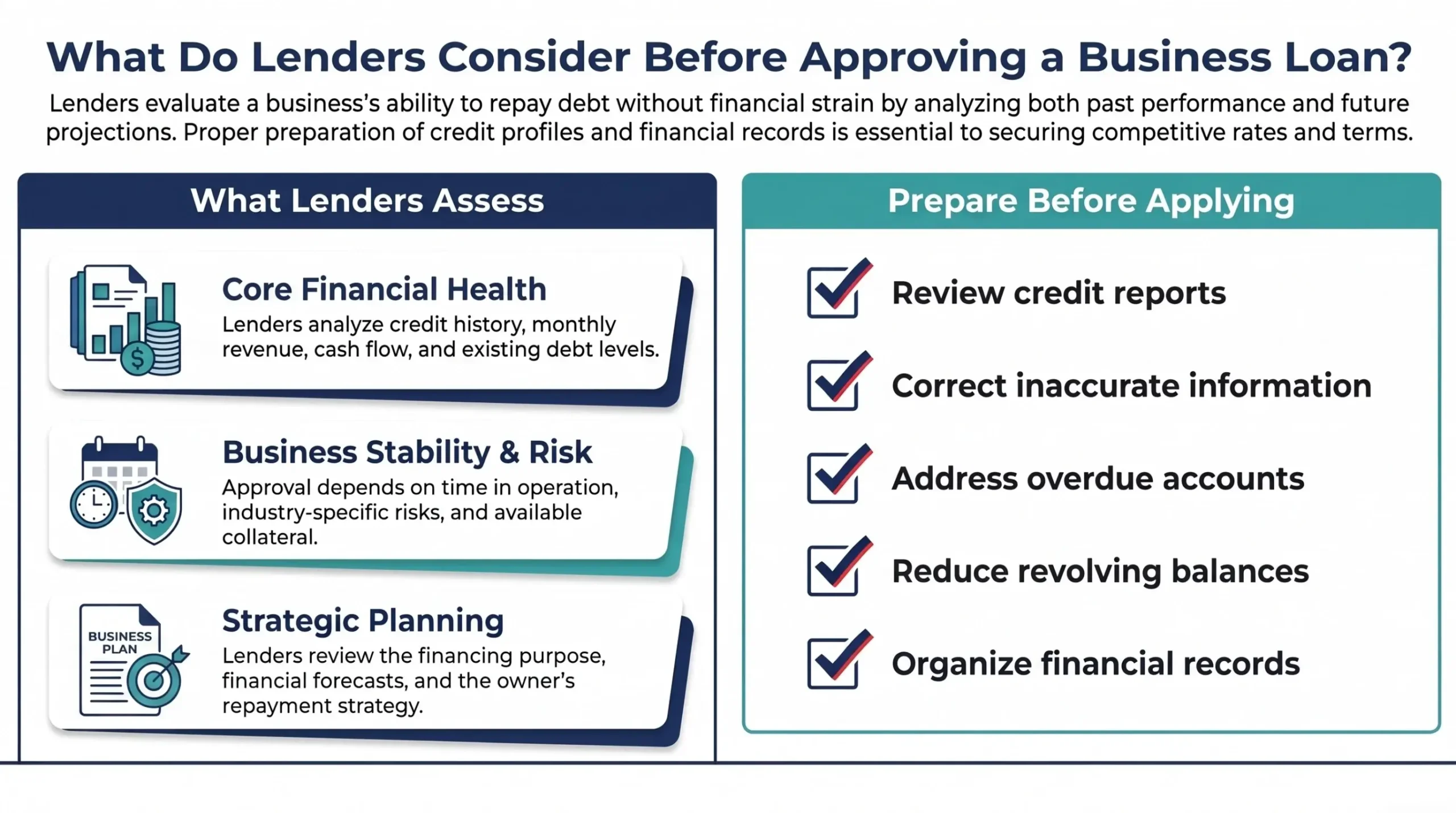
Each lender uses different criteria, but most want evidence that the business can repay the debt without creating unsustainable pressure.
They may assess:
- Business and personal credit history
- Monthly revenue and cash flow
- Existing business and personal debts
- Length of time in operation
- Industry stability and business risks
- Assets available as collateral
- Purpose of the requested financing
- Financial forecasts and business plans
Collateral may include equipment, inventory, property or another business asset. If a secured loan is not repaid, the lender may be permitted to seize and sell the pledged asset.
Credit720 encourages business owners to review both their business finances and personal obligations before applying. A loan may be approved based partly on the owner’s personal credit, especially when the company is new or has limited borrowing history.
How Can Credit Affect a Business Loan Application?
A stronger credit profile may improve access to competitive rates and repayment terms. However, a low score does not automatically eliminate every financing option.
Credit difficulties may result from:
- Missed or late payments
- High credit-card or line-of-credit balances
- Collections or defaults
- Too many recent credit applications
- Limited business credit history
- High debt compared with available income
Before applying, review your credit reports for errors, bring overdue accounts up to date where possible and avoid submitting several applications at once. Reducing revolving balances may also strengthen the overall application.
How to Compare Business Loan Offers
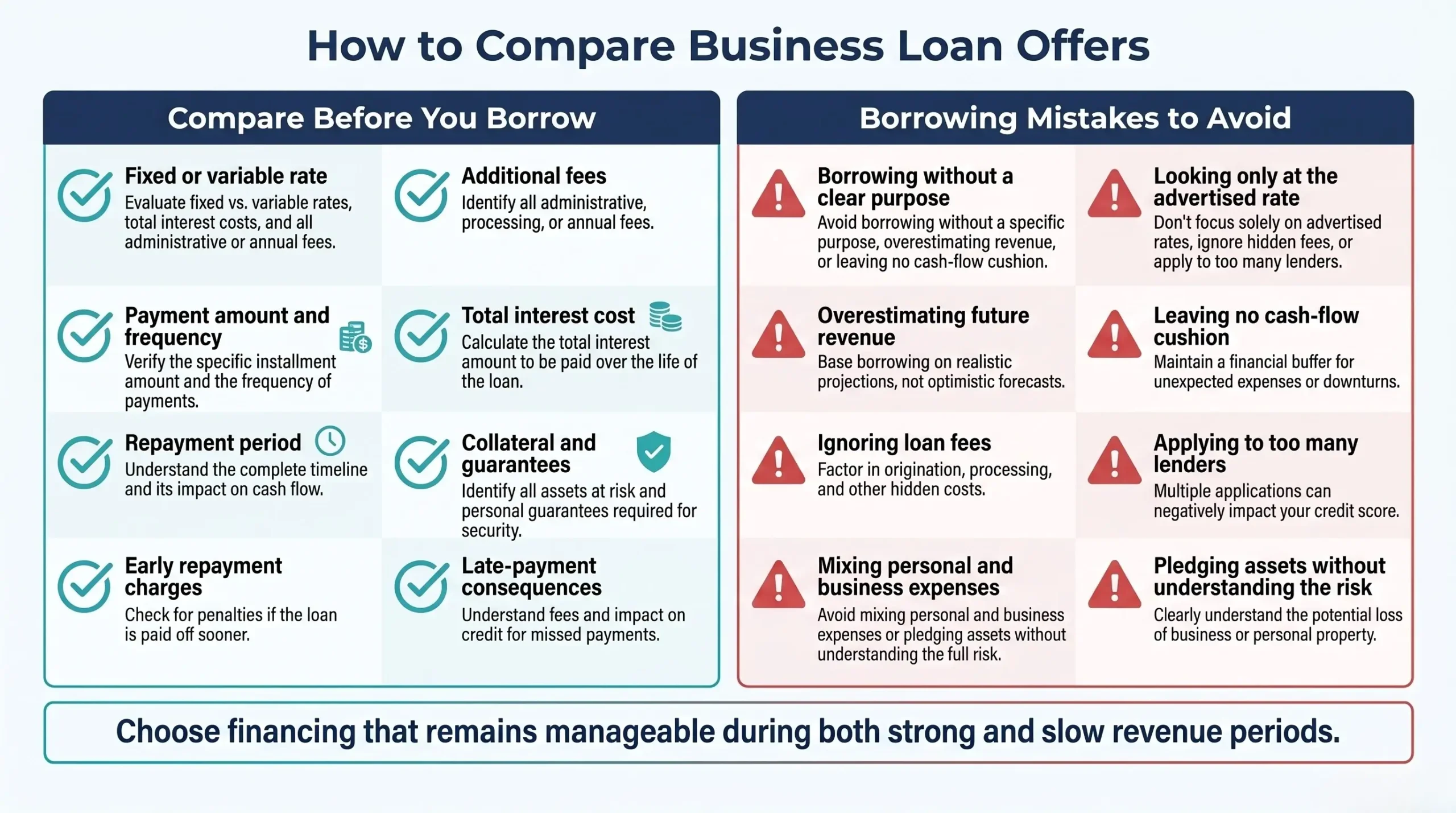
The lowest advertised interest rate is not always the least expensive option. When comparing Business Loan Services or offers from a small business loan lender, review the complete borrowing cost.
Compare:
- Fixed versus variable interest rates
- Application, administration and annual fees
- Payment amount and frequency
- Total interest over the full term
- Collateral and personal-guarantee requirements
- Early repayment fees
- Late-payment consequences
- Automatic renewal conditions
For example, a shorter term may reduce total interest but create a higher monthly payment. The best structure is one the business can manage during both strong and slow revenue periods.
Common Business Borrowing Mistakes to Avoid
Business owners can reduce unnecessary risk by avoiding these common mistakes:
- Borrowing without a specific use for the funds
- Using long-term financing for recurring losses
- Overestimating future sales
- Ignoring fees beyond the interest rate
- Mixing personal and business expenses
- Applying to multiple lenders within a short period
- Accepting payments that leave no cash-flow cushion
- Pledging important assets without understanding the risk
A loan should support a realistic business objective not simply postpone a continuing financial problem.
How Credit720 Supports Better Financing Decisions
Credit720 provides financial education and guidance for Canadian business owners exploring funding, managing credit challenges or recovering from debt pressure. The objective is to help owners understand possible financing paths, repayment affordability and the effect of new borrowing on their wider financial position.
Professional guidance can be particularly useful when personal and business debts overlap. Reviewing cash flow, current obligations and credit concerns before applying can help an owner decide whether borrowing, restructuring expenses or following another financial strategy is more appropriate.
Make Borrowing Part of a Sustainable Business Plan
A business loan can provide valuable support, but it should be treated as a financial tool rather than a quick solution. Before borrowing, define the purpose, calculate an affordable payment and compare the total cost across several options.
Business owners should also consider what would happen if revenue declined or an unexpected expense occurred. Maintaining a cash reserve and borrowing less than the maximum available may provide greater flexibility.
If credit problems, high debt or uncertain cash flow are affecting your options, explore Credit720’s educational resources and financial guidance. Understanding your position before signing an agreement can help you make a more informed decision and protect the long-term health of your business.
FAQs
Can I get a business loan with poor personal credit?
It may be possible, but your options, rates and security requirements could be different. Lenders may place greater emphasis on business revenue, collateral, cash flow or a personal guarantee.
Are business loans available for new businesses?
Some lenders and programs consider start-ups, although applicants may need a detailed business plan, realistic financial projections, industry experience and a personal investment.
What is the difference between a business loan and a line of credit?
A loan usually provides a lump sum with scheduled payments. A line of credit provides reusable access to funds up to an approved limit and is generally intended for short-term cash-flow needs.
Do business loans affect personal credit?
They can affect personal credit when the lender checks the owner’s credit, requires a personal guarantee or reports missed payments associated with that guarantee.
How long does business-loan approval take?
Timelines vary by lender, loan type, requested amount and application complexity. Preparing complete financial documents can help prevent avoidable delays.
Conclusion
A business loan can help Canadian entrepreneurs manage cash flow, purchase essential equipment or support business growth. However, the right financing decision depends on more than the amount offered. Interest rates, fees, repayment schedules, collateral requirements and personal guarantees should all be carefully reviewed before accepting a loan.
Preparing accurate financial records, checking your credit profile and calculating an affordable payment can improve your ability to compare options confidently. Most importantly, borrowing should support a realistic business objective without placing unnecessary pressure on day-to-day operations.
If credit challenges or existing debts are making the decision difficult, Credit720 offers educational resources and practical financial guidance. Understanding your complete financial position can help you choose a responsible path toward business stability and long-term growth.