

Bankruptcy can provide relief when debt becomes unmanageable, but decisions made before filing and after discharge can affect your financial recovery. Many Canadians focus only on eliminating debt and overlook the steps that protect their finances, credit profile, and future borrowing options.
Bankruptcy in Canada is a formal legal process involving disclosure requirements, financial counselling, and long-term credit consequences. Acting without a clear plan can create avoidable problems.
Credit720 supports Canadians with debt education, budgeting, credit counselling, and credit rebuilding guidance. When bankruptcy or a consumer proposal is being considered, a Licensed Insolvency Trustee is the professional authorized to administer those proceedings.
Why Bankruptcy Mistakes Can Be Expensive
The biggest mistakes usually come from acting too quickly, waiting too long, or misunderstanding what happens after filing.
Bankruptcy may discharge many unsecured debts, but it does not automatically fix the habits or budgeting problems that contributed to financial pressure. It can also remain on a credit report for years after discharge.
The Financial Consumer Agency of Canada states that a first bankruptcy is generally removed from a credit report six years after discharge. TransUnion may keep it for seven years after discharge in Newfoundland and Labrador, Ontario, Prince Edward Island, and Quebec.
Treat bankruptcy as one part of a broader financial recovery plan rather than the finish line.
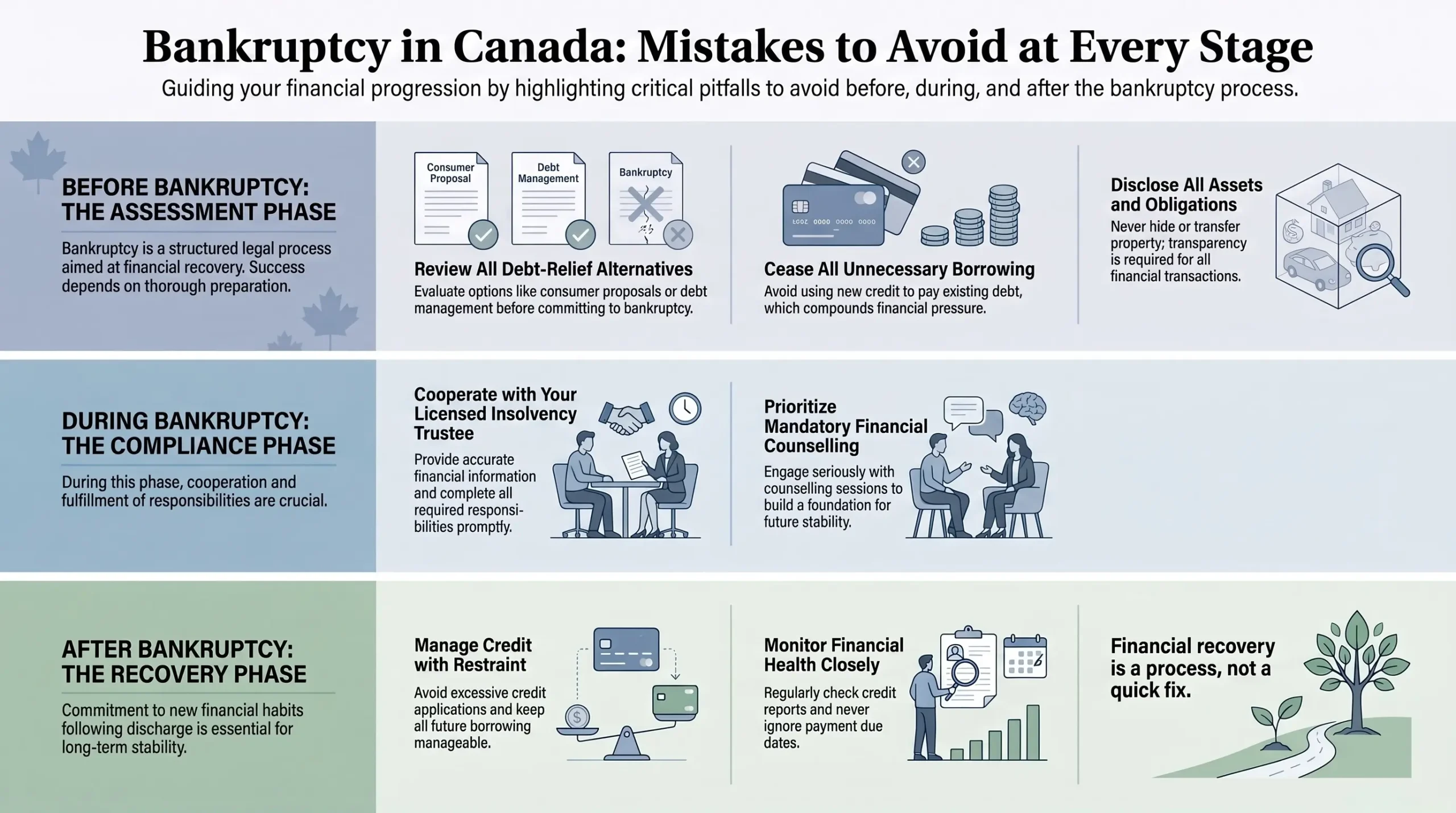
Mistakes to Avoid Before Bankruptcy
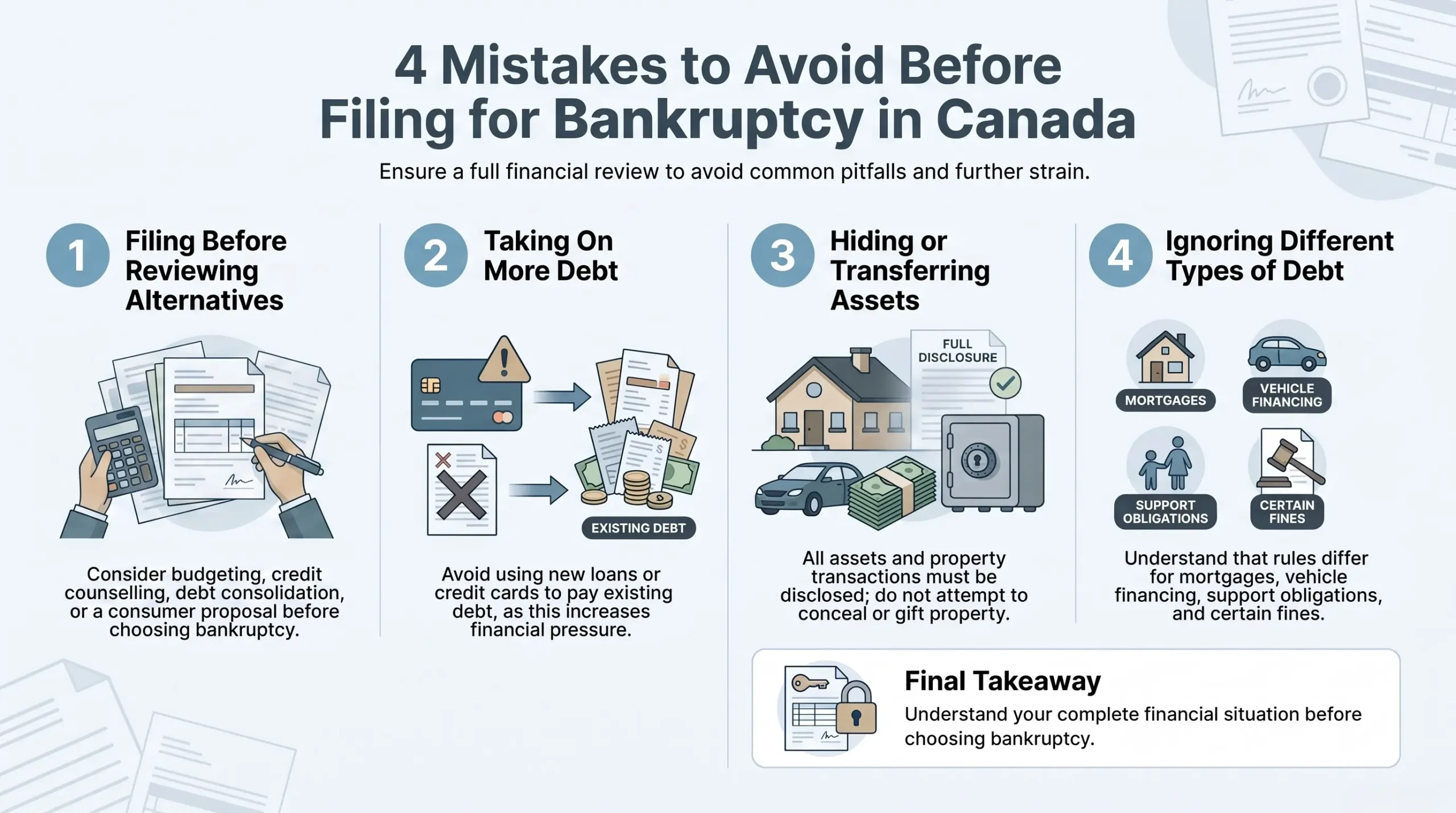
1. Filing Before Reviewing All Your Options
One of the most important mistakes is assuming bankruptcy is the only solution.
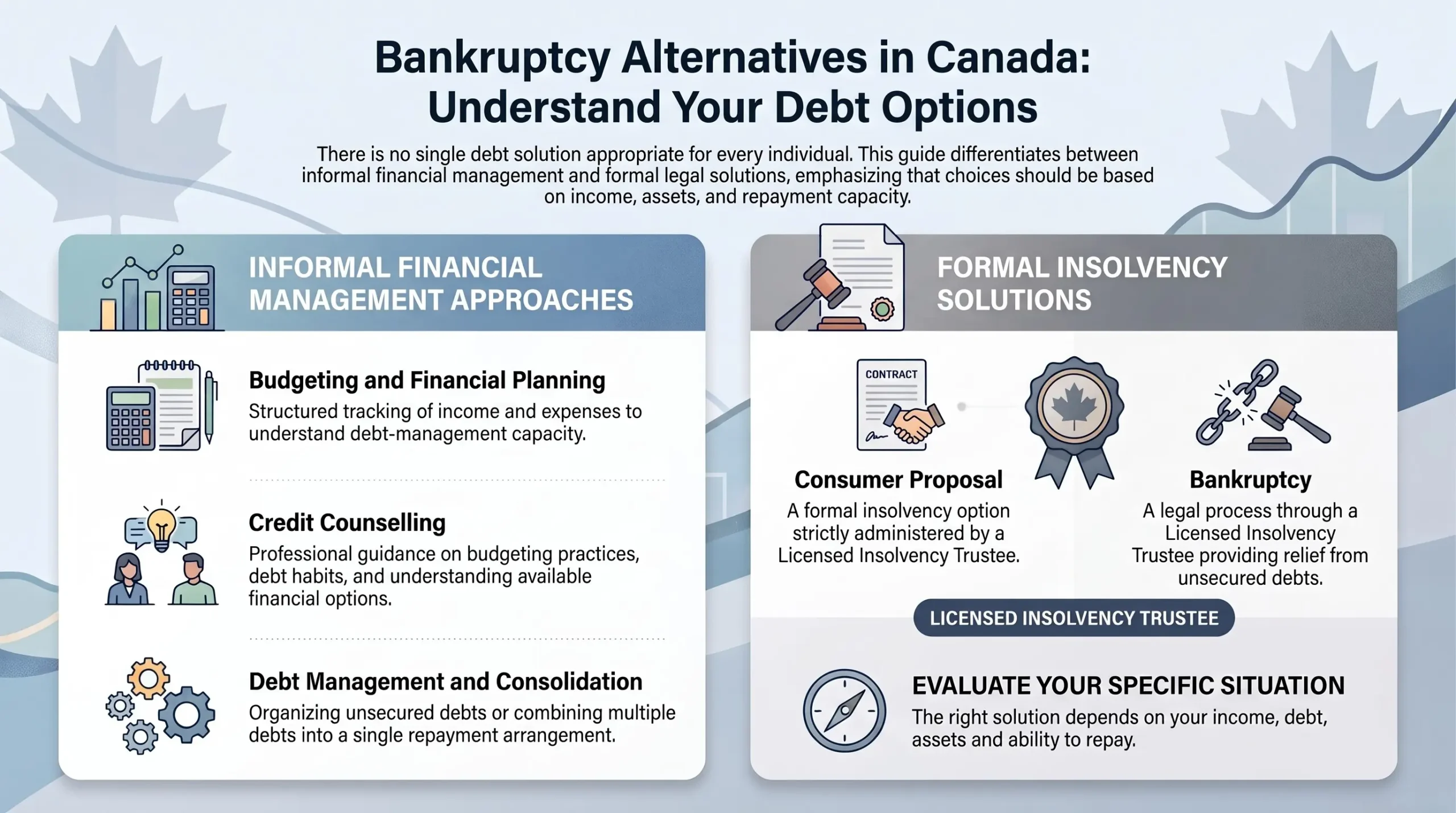
Depending on your income, assets, debt level, and ability to make payments, bankruptcy alternatives in Canada may include:
- A structured household budget
- Repayment arrangements with creditors
- Credit counselling
- A debt management plan
- Debt consolidation
- A consumer proposal
The Office of the Superintendent of Bankruptcy recognizes debt management plans, consumer proposals, and bankruptcy as different debt solutions with different financial and legal consequences.
Credit720 can help you better understand your debt position and prepare questions before speaking with a Licensed Insolvency Trustee about formal insolvency options.
2. Continuing to Borrow When You Cannot Repay
Using new credit to cover existing debt may provide short-term breathing room, but it can worsen the underlying problem.
For example, using one credit card to pay another’s balance or relying on high-cost loans to stay current can create a deeper repayment cycle.
If monthly obligations consistently exceed your available income, focus on cash flow, budgeting, and debt strategy before adding another loan.
3. Hiding, Gifting, or Transferring Assets
Do not move assets to friends or relatives because you believe doing so will protect them from bankruptcy.
Canadian bankruptcy rules require disclosure of assets, liabilities, and certain property that has previously been sold or transferred. The Office of the Superintendent of Bankruptcy also identifies fraudulent disposal or concealment of property as potential misconduct.
If you recently sold, gifted, or transferred property, disclose it fully to the Licensed Insolvency Trustee and obtain appropriate professional advice.
4. Ignoring Secured Debts and Debts That May Survive Bankruptcy
Not every debt is treated the same way.
Mortgages and vehicle loans are generally secured by property, while certain obligations may remain payable after bankruptcy. Government guidance notes that some debts, including support payments and court-imposed fines, penalties, or restitution orders, are not normally released by a bankruptcy discharge.
Before filing, create a complete list of debts, including:
- Credit cards
- Personal loans
- Lines of credit
- Tax debts
- Payday loans
- Collections
- Mortgages
- Vehicle financing
- Student loans
- Support obligations
This gives you a clearer picture of what bankruptcy may and may not solve.
Mistakes to Avoid During Bankruptcy
5. Failing to Complete Required Duties
Bankruptcy comes with responsibilities.
These may include disclosing assets and liabilities, providing financial information, surrendering credit cards, attending required counselling sessions, and cooperating with the Licensed Insolvency Trustee.
Failing to complete your duties can delay discharge or create additional complications.
Keep requested documents organized and respond promptly whenever your trustee requires information.
6. Treating Financial Counselling as a Formality
Required financial counselling should be treated as an opportunity to identify the behaviours and circumstances that contributed to debt.
Use the process to improve practical skills such as:
- Creating a realistic spending plan
- Managing irregular expenses
- Building emergency savings
- Using credit responsibly
- Recognizing early signs of debt stress
Credit720 also emphasizes budgeting and financial education as important parts of long-term credit recovery.
Mistakes to Avoid After Bankruptcy
7. Applying for Too Much Credit Too Quickly
After discharge, it is understandable to want to rebuild your credit immediately. However, submitting several credit applications in a short period can work against your recovery.
Start gradually.
Focus first on stable income, manageable expenses, and reliable bill payments. If you decide to use a secured credit card or another credit-building product, make sure the repayment obligation comfortably fits your budget.
Credit720 encourages Canadians to approach credit rebuilding as a long-term financial process rather than trying to repair a credit score overnight.
8. Missing Payments on New Accounts
Payment behaviour remains important when rebuilding your financial profile.
A missed payment after bankruptcy can interrupt the progress you are trying to make. Consider using calendar reminders or automatic payments for essential bills and active credit accounts where practical.
Consistency is generally more valuable than opening several new accounts at once.
9. Carrying High Credit Card Balances
Getting approved for credit does not mean you should use the entire available limit.
High balances can put renewed pressure on your monthly budget and may affect how lenders assess your overall credit profile.
Use credit for small, planned purchases and pay balances down regularly whenever possible.
10. Failing to Check Your Credit Reports
After your bankruptcy is discharged, review your credit reports from Equifax and TransUnion.
Check whether:
- Your personal information is accurate
- Accounts included in the bankruptcy are being reported correctly
- Old balances are not being reported incorrectly
- There are accounts you do not recognize
If you identify a genuine error, follow the credit bureau’s dispute process.
Credit720 can also help Canadians understand the factors affecting their credit profile and develop practical habits for rebuilding after serious debt problems.
A Simple Post-Bankruptcy Recovery Plan
A structured recovery strategy can make rebuilding feel more manageable.
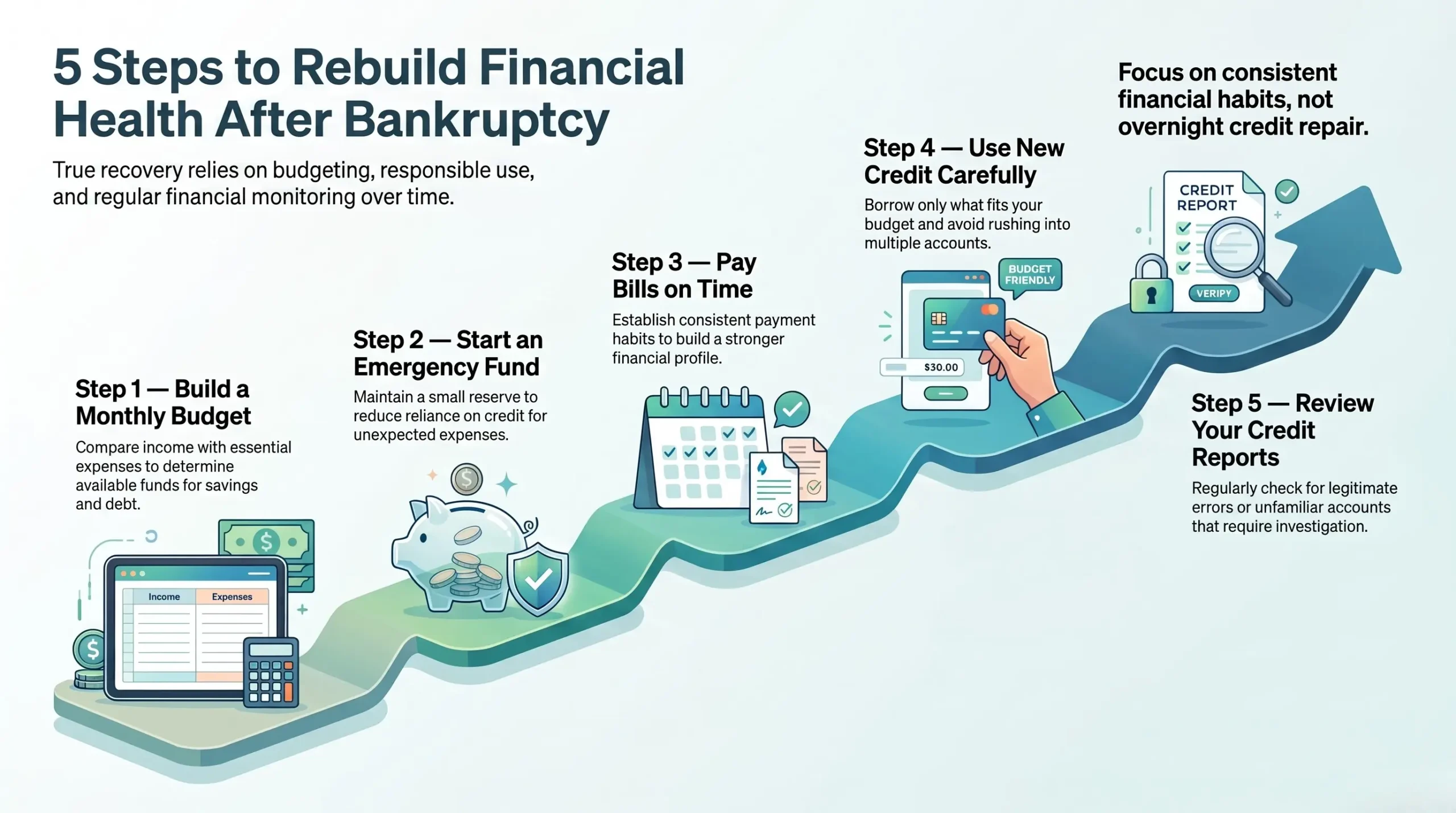
Follow these five steps:
- Build a monthly budget based on your current income and essential expenses.
- Create a small emergency fund so unexpected costs do not immediately require new debt.
- Pay active accounts and household bills on time to develop stronger financial habits.
- Use new credit conservatively and borrow only when repayment is affordable.
- Review your credit reports regularly and correct legitimate reporting errors.
Financial recovery does not happen overnight, but consistent behaviour can gradually strengthen your credit profile and overall financial stability.
When Should You Consider Professional Guidance?
If you are unsure whether to file bankruptcy, compare alternatives, or rebuild your credit after discharge, professional guidance can help you avoid expensive assumptions.
A Licensed Insolvency Trustee should be consulted for advice and administration relating specifically to bankruptcy or consumer proposals.
Credit720 can support the broader financial recovery process through credit education, budgeting, debt management guidance, and credit rebuilding assistance. Its existing resources also cover credit counselling and financial strategies for Canadians dealing with debt pressure.
Understanding these different roles can help you access the right form of support at the right stage of your recovery.
FAQs
What should you avoid doing before filing bankruptcy in Canada?
Avoid taking on unnecessary new debt, hiding or transferring assets, favouring certain creditors without advice, and filing before reviewing all available debt solutions. Always provide complete and accurate financial information to your Licensed Insolvency Trustee.
Should I stop paying all my debts before filing bankruptcy?
Do not automatically stop making payments without professional guidance. Secured debts such as a mortgage or vehicle loan may be treated differently from unsecured debts. Speak with a Licensed Insolvency Trustee about your specific obligations before making any changes to your payments.
How long does bankruptcy stay on your credit report in Canada?
A first bankruptcy is generally removed six years after discharge. TransUnion may retain it for seven years after discharge in Newfoundland and Labrador, Ontario, Prince Edward Island, and Quebec. Multiple bankruptcies may remain for significantly longer.
What are some alternatives to bankruptcy in Canada?
Depending on your financial circumstances, alternatives may include credit counselling, budgeting, creditor arrangements, a debt management plan, debt consolidation, or a consumer proposal. A Licensed Insolvency Trustee can explain formal insolvency options.
How can I rebuild credit after bankruptcy?
Start with a realistic budget, pay bills on time, keep new borrowing manageable, build emergency savings, review your credit reports, and avoid applying for too many credit products at once.
Final Thoughts
Bankruptcy can be a legitimate financial solution, but successful recovery depends heavily on what you do before filing and after discharge.
Avoid taking on unnecessary debt, transferring assets without proper advice, ignoring required bankruptcy duties, or rushing into new credit after your bankruptcy is complete.
Just as importantly, compare bankruptcy alternatives in Canada before deciding which path is appropriate for your circumstances. A strong recovery plan should include budgeting, disciplined repayment habits, credit monitoring, emergency savings, and realistic financial goals.
If you are dealing with debt challenges or rebuilding your credit, Credit720 offers educational resources and guidance that can help you better understand your options and work toward greater financial stability.