

Debt rarely piles up overnight. Credit cards, personal loans, a few missed payments, rising living costs or a surprise expense can slowly make each month harder to cover. Once several debts are fighting over the same paycheque, bankruptcy can start to look like the only way out.
Before you go down that road, looking into bankruptcy alternatives Canada can show you whether another debt-relief option might suit your situation better.
Why Explore Other Options Before Bankruptcy?
Bankruptcy can bring relief from serious debt, but it’s a big financial decision. Depending on your income, how much you owe, what you own and whether you can keep up regular payments, there may be other ways to get back on track.
Checking the alternatives first lets you compare the total cost, how long repayment will take, the effect on your credit and what you can afford each month, so the decision isn’t driven by pressure alone.
What Options Can Canadians Consider?
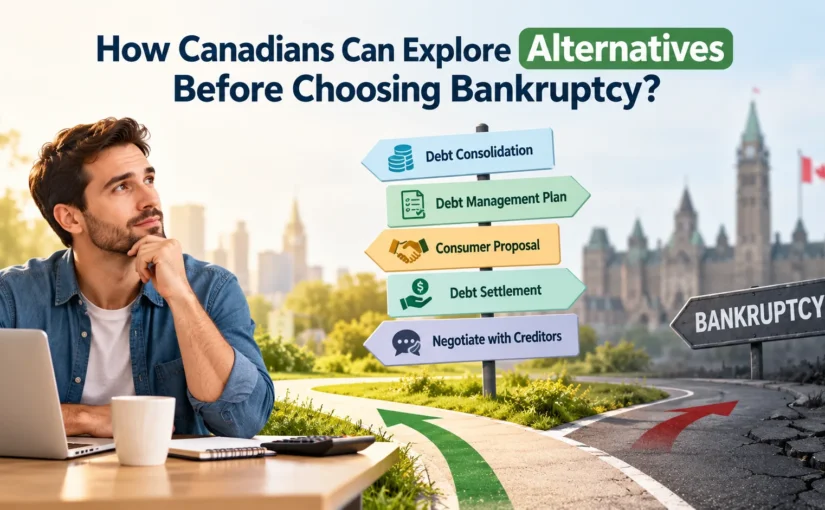
No single solution fits every debt situation. These are some of the options people most often look at:
- Debt consolidation rolls several debts into one payment. That makes repayment simpler, and if you can get good terms, it may lower your interest too.
- With a debt management plan, a credit counselling agency works with your creditors to set up a structured payment plan and may be able to reduce interest.
- A consumer proposal is a formal process under Canada’s Bankruptcy and Insolvency Act that lets eligible people offer their creditors new repayment terms.
- With debt settlement, you negotiate directly with creditors, and depending on your situation, some will agree to new repayment terms.
- If you get in touch with your lenders before things get worse, you can ask whether they’ll lower your payments, give you more time to repay or set up a different payment arrangement.
Look Beyond the Monthly Payment
A smaller monthly payment sounds appealing, but look at the full picture before you commit. Check the total repayment cost, interest, fees and how long the plan runs, and be honest about whether you can stick with it.
Some non bankruptcy alternatives can make debt much easier to handle, but they still take steady payments and discipline. The right choice should ease the pressure for good, so be wary of any plan that only spreads the same burden over more years.
When Should You Get Professional Guidance?
Still weighing up which route to take? Talking it through with a professional can make the choice a lot clearer. A financial adviser or qualified debt professional can go through your income, debts, assets and monthly expenses before talking through possible solutions.
That’s especially helpful if you’re juggling several types of debt or have already started missing payments.
FAQs
Can debt consolidation help me avoid bankruptcy?
It can, if your income is still enough to cover one structured monthly payment. Consolidation simplifies several debts and may cut your interest if you can get better terms. It doesn’t reduce the amount you owe, though.
What is a consumer proposal?
If you qualify, a consumer proposal lets you offer your creditors a new repayment deal, as set out in Canada’s Bankruptcy and Insolvency Act. You work through a Licensed Insolvency Trustee to set it up, and you avoid filing for bankruptcy in the process.
Are non-bankruptcy options suitable for everyone?
They aren’t. What works for you will depend on your income, how much you owe in total, your payment history, what you own and whether you can keep making payments. Debt that’s still under control can often be handled with one of these options, but if things are more serious, you may need different advice.
Should I speak with creditors before considering bankruptcy?
It’s a good idea. If you contact them early, some lenders will agree to a new payment arrangement, such as more time to repay or smaller monthly payments. Leave it too long and you’ll usually find you have fewer options left.
Conclusion
There are times when bankruptcy is the right call, but there’s no need to start there. Depending on where your finances stand, you might be able to use debt consolidation, a consumer proposal, a repayment plan or a deal with your creditors instead.
The first step is to work out exactly what you owe and how much you can afford to pay each month. Once you have those numbers, you can weigh up each option properly and choose one that sorts out the debt, without making a hurried decision you’ll regret later.