



Applying for an equity loan can feel stressful when your credit score has slipped or several debt payments are competing for your paycheque. You may have built value in your property, yet still worry that missed payments, uneven income or growing credit card balances will prevent you from qualifying.
Preparing before you apply helps you understand both your borrowing options and the responsibility attached to them. For Canadians considering property-backed borrowing, the goal should be a repayment arrangement that fits everyday life, including essential expenses and unexpected costs.
Credit720 offers guidance to help Canadians explore equity-related options within their broader financial situation. That conversation starts with understanding your debts, reviewing your credit and deciding whether borrowing against your home supports your recovery.
This guide explains how to prepare for an equity loan application in canada, which documents to organize and what questions to ask. Whether you are rebuilding credit or considering debt consolidation, these steps can help you approach a lender with clearer expectations and a realistic plan.
What Is an Equity Loan?
In this guide, an equity loan means borrowing secured against the value built up in your home. Your equity is the property’s appraised value minus mortgages and other borrowing secured against it.
A home equity loan generally delivers a lump sum repaid on an agreed schedule. A home equity line of credit, or HELOC, provides revolving access to credit. Both use your home as security, so missed repayments can put your property at risk.
How to Prepare for an Equity Loan Application
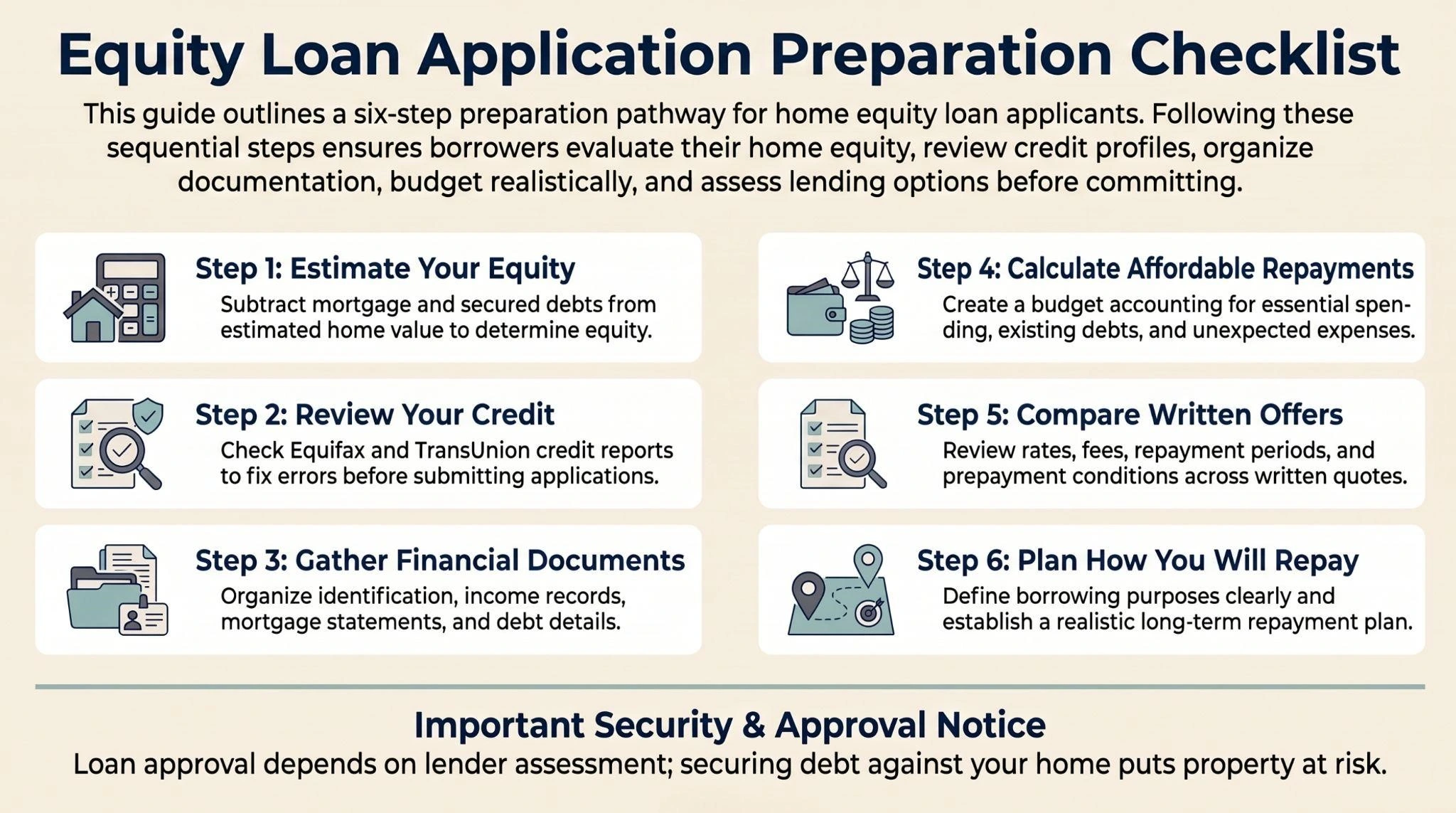
Before applying, check your available equity, review your credit reports, gather financial documents, calculate affordable repayments and compare written borrowing terms.
1. Estimate Your Available Equity
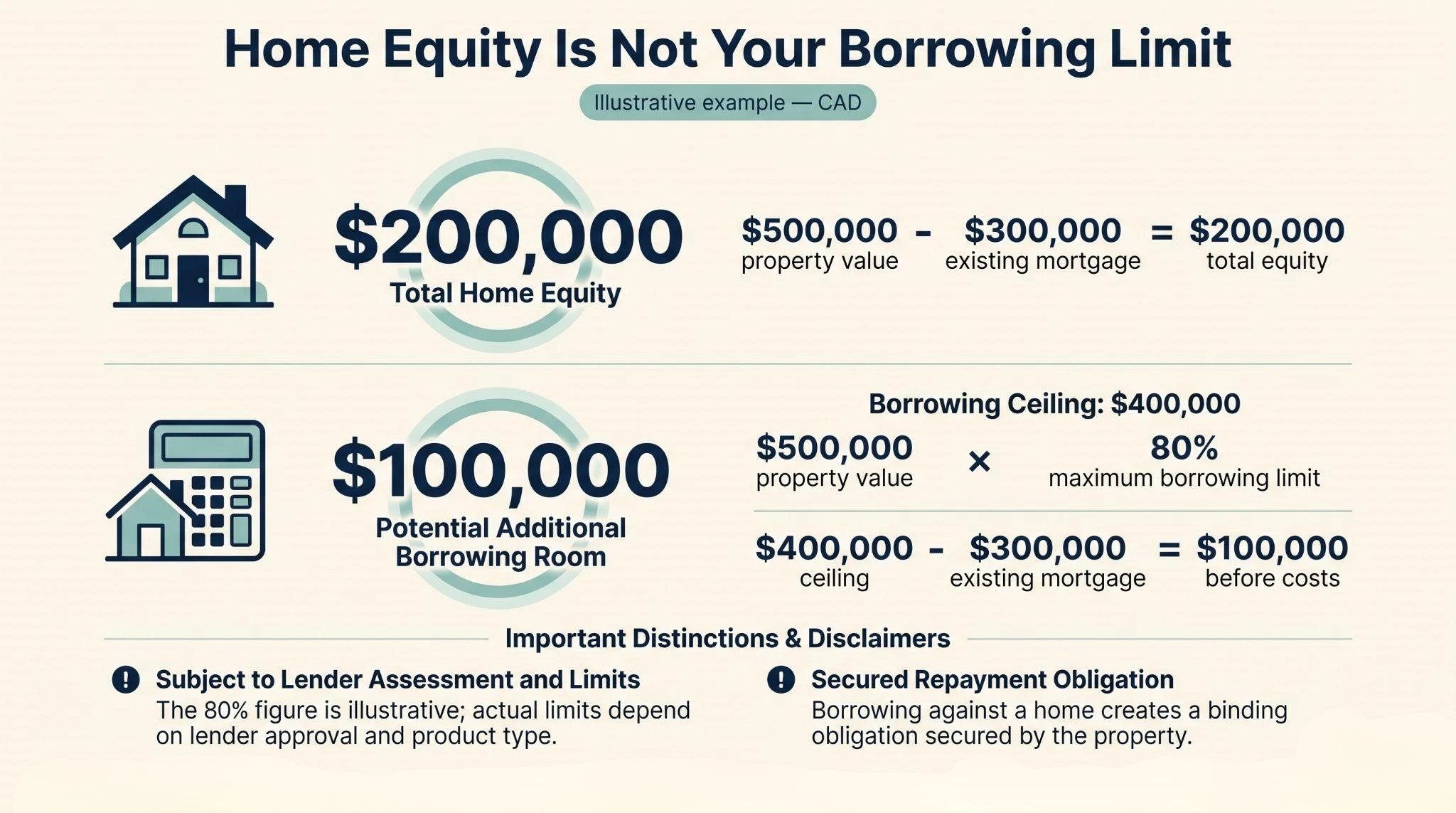
Start with a realistic property valuation and current balances for every loan secured against your home. Do not assume your total equity equals the amount you can borrow.
For illustration, a home valued at $500,000 with a $300,000 mortgage has $200,000 in equity. If a lender permits total secured borrowing up to 80% of the property value, the additional borrowing room would be $100,000 before costs, assuming no other secured debts. Approval may be lower.
Credit720’s equity loan guidance can help you explore how this borrowing might fit your circumstances.
2. Review Your Credit Reports Early
Request your free credit reports from Equifax and TransUnion. Checking your own report does not lower your credit score.
Look for unfamiliar accounts, incorrect balances and payments wrongly recorded as late. Dispute inaccuracies with the relevant credit bureau and contact the reporting lender with supporting documents.
Late payments, high credit utilization and limited credit history can affect how lenders assess your application. Before applying:
- Pay bills on time and maintain required minimum payments.
- Reduce credit card balances where your budget allows.
- Aim to use less than 30% of your available revolving credit.
- Avoid unnecessary new credit applications.
3. Organize Your Application Documents
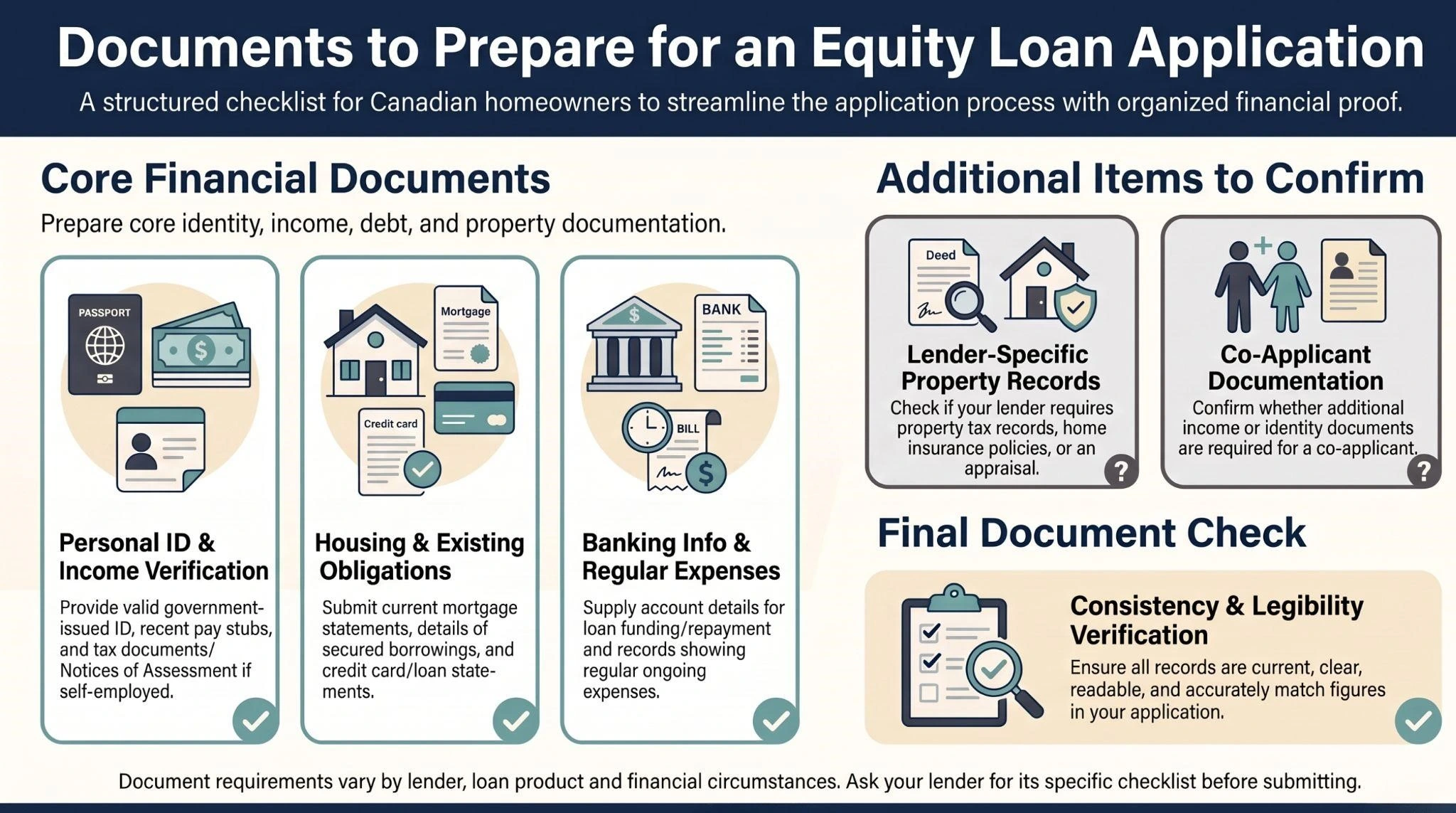
Ask the lender for its specific home equity loan requirements before submitting paperwork. A useful starting folder includes:
- Valid government-issued identification.
- Recent pay stubs and other proof of income.
- Tax documents and Notices of Assessment, particularly if self-employed.
- Current mortgage and other debt statements.
- Records of regular expenses and bank account details.
Ask whether the lender also needs property tax records, insurance information or an appraisal. Provide complete information for any co-applicant, and explain irregular income clearly. Requirements vary by lender and product.
4. Work Out a Comfortable Repayment
Prepare a monthly budget using take-home income. Include housing costs, groceries, transportation, insurance, existing debts and an allowance for emergencies.
Next, add the proposed repayment. If the rate is variable, check whether higher payments would still fit. For a HELOC, plan to repay principal even if the agreement permits interest-only minimum payments.
If the payment leaves you dependent on credit cards for essentials, reconsider the borrowing amount. These budgeting resources offer a starting point for reviewing your spending.
5. Compare the Full Borrowing Cost
Request written details covering:
- Interest rate and whether it is fixed or variable.
- Payment amount, repayment period and renewal conditions.
- Appraisal, legal, title and administration charges.
- Prepayment restrictions and applicable penalties.
Some property-backed borrowing carries setup costs, so compare what you receive after charges with what you must repay.
Ask whether an initial eligibility discussion involves a hard credit inquiry before consenting. Compare terms carefully before submitting formal applications.
6. Check Whether Consolidation Addresses the Problem
If you are considering debt consolidation using home equity, list the balances you intend to repay and compare the proposed arrangement with your existing obligations.
A lower monthly payment can come from spreading repayment over more years. Calculate the total interest over the proposed repayment schedule to see whether the apparent savings hold up.
Also decide how you will avoid rebuilding the cleared balances. Ask Credit720 about reviewing debt options alongside equity borrowing, especially if your income no longer covers essential spending. Moving unsecured debt onto your home changes the consequences of not paying.
Common Application Mistakes to Avoid
Avoid these preventable problems:
- Borrowing the maximum: Set the amount around a defined need.
- Closing older accounts automatically: Consider credit history, fees and spending control first.
- Submitting inconsistent figures: Reconcile income and debt balances with statements.
- Rushing after a decline: Ask what affected the decision before applying elsewhere.
How Credit720 Supports Your Preparation
Credit720 describes its role as a debt advisory firm. Its equity-related consultations help Canadians review their financial circumstances, explore options and identify questions before moving forward.
Use that discussion to consider credit rebuilding, affordability and alternatives. A lender determines approval and borrowing terms; advisory support helps you make an informed decision.
FAQs
What Documents Do I Need for an Equity Loan Application?
Prepare valid identification, recent proof of income, mortgage statements and details of your existing debts and expenses. Self-employed applicants may also need tax documents and Notices of Assessment. Ask your lender for its complete checklist, as requirements vary by product and financial circumstances.
Can I Qualify for an Equity Loan with Bad Credit?
You may qualify, depending on the lender’s requirements, available property equity, income and existing debt obligations. Your credit profile can influence eligibility and borrowing terms, so having equity alone does not guarantee approval. Review affordability and the full borrowing cost before accepting an offer.
How Much Can I Borrow Against My Home Equity?
For many home equity borrowing arrangements, you can borrow up to 80% of your home’s appraised value, including your existing mortgage and other secured debts. Your actual borrowing amount depends on the product, lender assessment and ability to repay. HELOCs have different limits, so confirm which rules apply to your application.
Will Applying for an Equity Loan Affect My Credit Score?
A formal application may involve a hard credit inquiry, which can affect your credit score. Checking your own credit report is a soft inquiry and does not lower your score. Before proceeding, ask whether an initial eligibility check requires a hard inquiry and avoid unnecessary credit applications.
How Can I Improve My Credit Before Applying for an Equity Loan?
Focus on paying bills on time, reducing credit card balances and correcting inaccuracies on your credit reports. Keeping credit utilization below 30% and limiting unnecessary applications can support a healthier credit profile. These habits take time to show results and do not guarantee loan approval.
Conclusion
Preparing for an equity loan application starts with understanding your finances. Check how much equity may be available, review both credit reports and gather accurate documents before approaching a lender. A realistic budget and a careful comparison of fees and repayment terms can help you judge whether an offer fits your needs.
If debt consolidation is your goal, consider the full repayment cost and how you will prevent balances from growing again. Consistent payments and manageable borrowing remain central to financial recovery. Explore Credit720’s educational resources or seek guidance to understand your options before deciding whether an equity loan is the right next step.